
Publications
Scroll down to explore journal articles and conference papers presented by our partners and affiliates, showcasing research conducted under the INVITED project.


Zeitschrift der Pädagogischen Hochschule Freiburg
A description of the INVITED project in the university magazine ph fr of the University of Education Freiburg, Germany. The article can be found on pages 30-31 of the publication.

Recommendations for successful virtual exchange projects in early language education
Birsak de Jersey, K., Jeeves, H., Kolb, A., & Pinguri, N. (2025). “Recommendations for successful virtual exchange projects in early language education”. e-TEALS, 17, pp. 8-26.

Pre-service teachers’ perspectives on integrating virtual exchange into early language learning
Dagarin Fojkar, M., Brzosko-Barratt, K., Korošec, Ž., Pinguri, N., & Rozmanič, T. (2026). “Pre-service teachers’ perspectives on integrating virtual exchange into early language learning”. In J. Rokita-Jaśkow & M. Ellis (Eds.), Global challenges facing early language teaching. Routledge. (in press)

Virtual exchange in the young learners’ language classroom
Kolb, A., & Pinguri, N. (2026). “Virtual exchange in the young learners’ language classroom”. In D. Bullock (Ed.), IATEFL 2025 Edinburgh conference selections. IATEFL. pp. 165-167
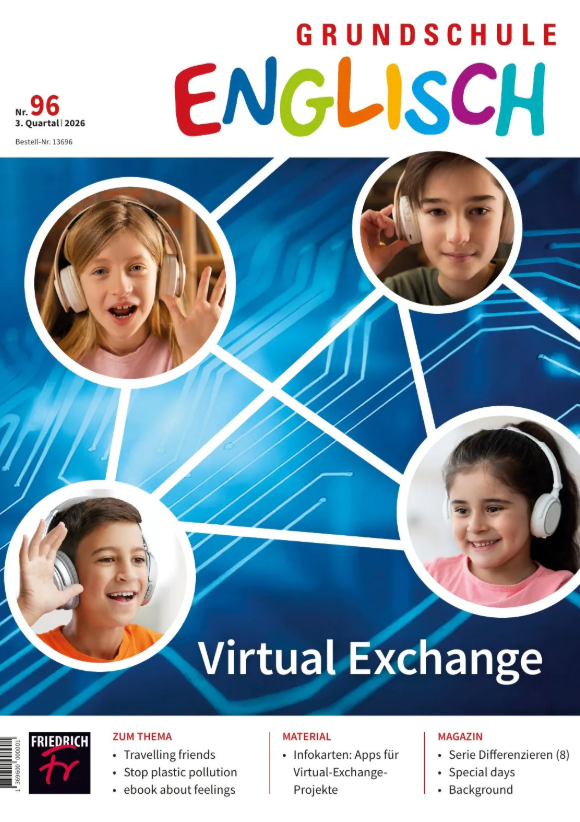
Let’s get started: your first virtual exchange. Das Projekt INVITED erarbeitet Materialien für Lehrkräfte
Kolb, A. (2026). “Let’s get started: your first virtual exchange.
Das Projekt INVITED erarbeitet Materialien für Lehrkräfte”. Grundschule Englisch. 96, pp. 30-31
MA Theses
eTwinning and virtual exchanges in Slovenian primary schools and kindergartens (2026)
Student: Tjaša Traven Mentor: Mateja Dagarin Fojkar
Digital transformation has had a significant impact on education, as digital technologies offer new opportunities for communication and learning. Virtual exchange and eTwinning play an important role in creating authentic learning experiences and promoting international cooperation. They enable learners to use a foreign language in real-life situations while developing digital competences and intercultural understanding through collaboration with peers from other countries.
The aim of this master’s thesis was to explore the role of virtual exchange and eTwinning projects in Slovenian primary schools and preschools and to examine how educators plan and implement such projects, how competent they feel to carry them out, and what impact these projects have on their professional development and on the development of pupils and preschool children.
The theoretical part presents digital transformation in education, digital competences, authentic foreign language learning, virtual exchange and the eTwinning online community. The empirical part is based on a qualitative research approach. Data were collected through semi-structured interviews with seven Slovenian teachers and preschool educators who have experience with eTwinning projects and virtual exchange. Five participants teach English as a foreign language in the first and second cycles of primary school, one teaches English in both primary school and preschool, and one is a preschool teacher.
The results showed that these projects contribute significantly to the development of digital, organisational and language competences of teachers and preschool educators, while also supporting their professional development and international cooperation. According to the interviewees, eTwinning projects have a positive impact on pupils and preschool children, particularly by increasing their motivation for foreign language learning, enabling authentic language use, and fostering intercultural understanding, cooperation and independence. Despite these benefits, organisational, technical and time-related challenges were also identified. The study shows that virtual exchange and eTwinning projects can enrich the educational process and support contemporary approaches to foreign language teaching and international cooperation.
Development of listening and speaking skills in English through a virtual exchange with first-grade primary school students (2026)
Student: Lara Bizjak Mentor: Mateja Dagarin Fojkar
Virtual exchange (VE) is a form of the Communicative Approach to foreign language teaching that uses digital communication tools to enable cooperation and interaction between partner classes in geographically separate locations. Although the implementation of such projects has become increasingly common with the development of information and communication technology, only a limited number of studies have examined their implementation with pupils in the first educational cycle of primary school. Our literature review identified several studies on VE in relation to the development of listening and speaking skills; however, none focused on VE with pupils in this age group. In the Slovenian context, there is no research on virtual exchange in English lessons in the first educational cycle of primary school, which may be related to the fact that foreign language learning in the first grade only became compulsory in the 2024/25 school year. This master’s thesis examines the relationship between the implementation of a virtual exchange project and the development of first-grade pupils’ listening and speaking skills, as well as their experience of learning English. The study involved 12 first-grade pupils from a primary school in the Central Slovenia region who used digital communication tools to collaborate with a class of eight first-grade pupils from Warsaw, Poland. The theoretical part presents the Communicative Approach to teaching English to young learners, the development of listening and speaking skills at this age, the characteristics and pedagogical potential of virtual exchange, and the teacher’s role in implementing VE. In the empirical part, both quantitative and qualitative research methods were used. Quantitative data were collected using listening and speaking tests and a questionnaire on pupils’ experience of learning English. The speaking tests were audio-recorded, and the recordings were subsequently analysed qualitatively. The same instruments were used before the start of VE and after its completion, and the results were then compared. The results show that the pupils made considerable progress in both listening and speaking skills during the project. In the speaking test, they improved particularly in their use of vocabulary and structures that had been used during the synchronous virtual exchange or supporting activities. The study found no significant relationship between the implementation of virtual exchange and changes in pupils’ experience of learning English. Although the findings cannot be generalised to the wider population due to the small sample size, they may encourage and support teachers in implementing similar projects. They may also provide a basis for developing guidelines and educational materials for the implementation of similar projects and for further research on virtual exchange in English language teaching at primary level in the Slovenian context.