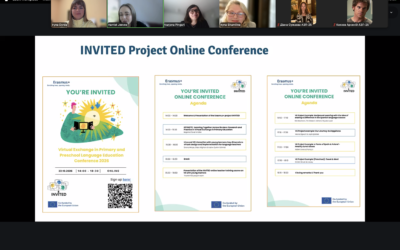
How can virtual exchange (VE) become a meaningful part of initial language teacher education? And how can future teachers be prepared to integrate international collaboration into their own classrooms?
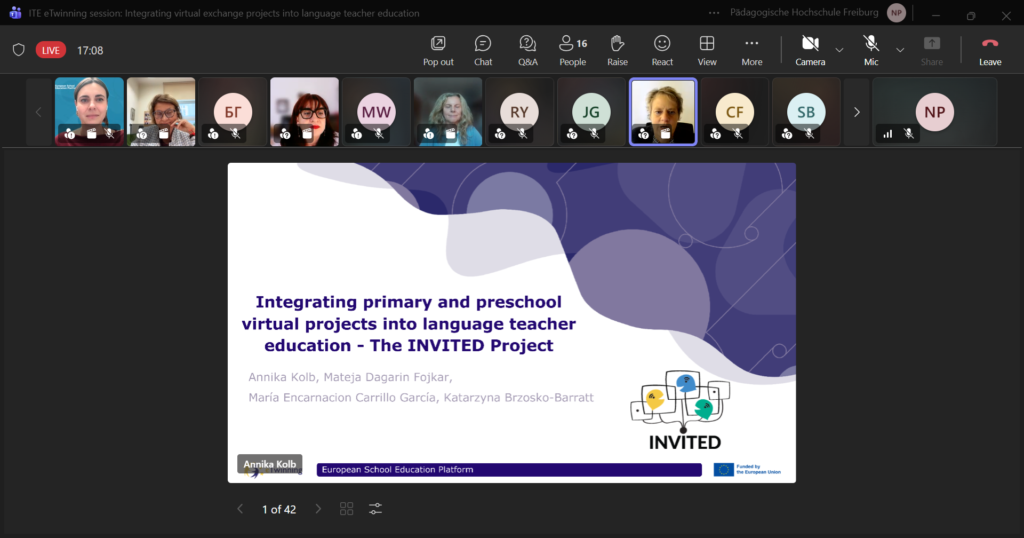
These questions were at the heart of the ITE eTwinning session: Integrating Virtual Exchange Projects into Language Teacher Education on October 14th, featuring contributions from four European universities involved in the Erasmus+ INVITED project: Annika Kolb (Freiburg University of Education), Mateja Dagarin Fojkar (University of Ljubljana), María Encarnación Carrillo García (University of Murcia) and Katarzyna Brzosko-Barratt (University of Warsaw).
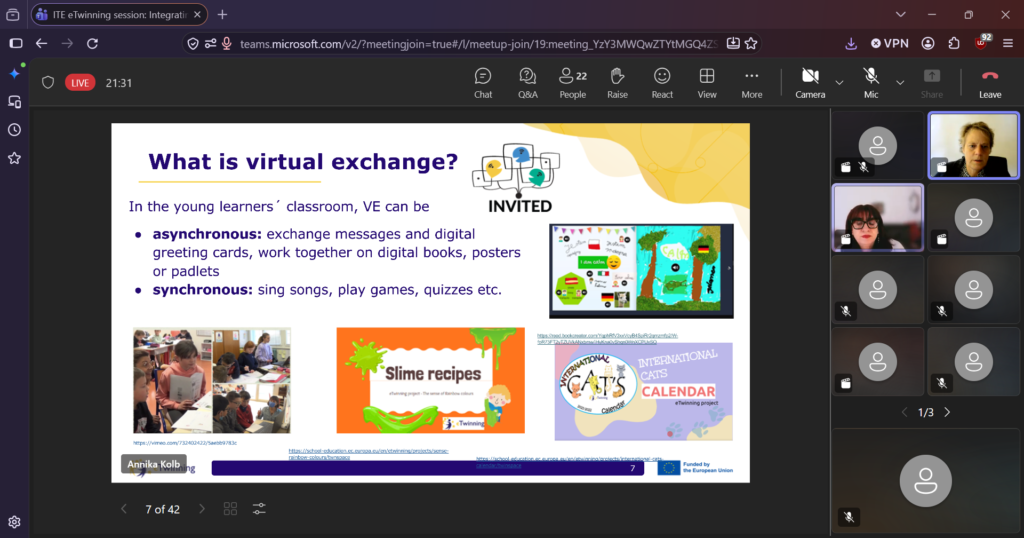
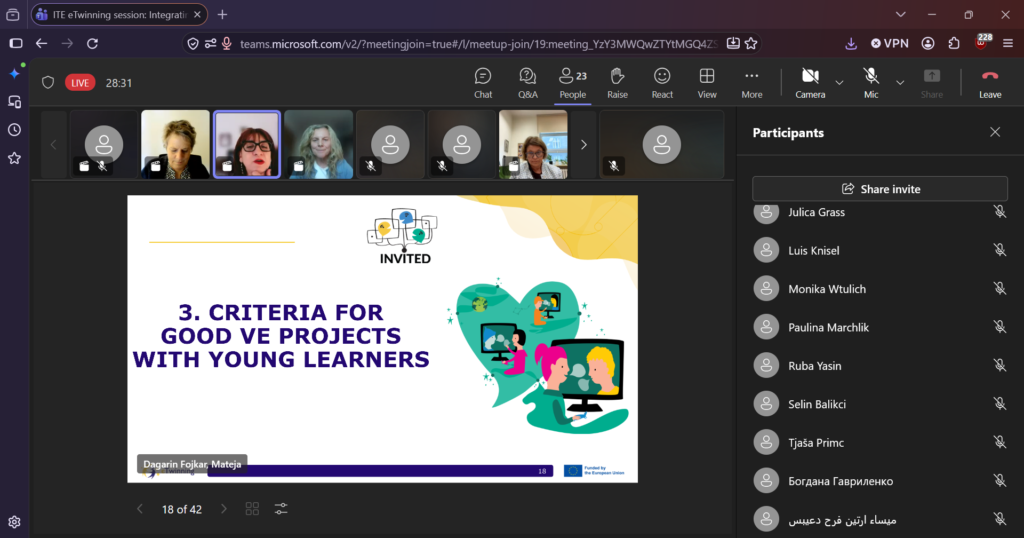
The session introduced the INVITED project (Integrating Primary and Pre-school Virtual Exchange Projects into Language Teacher Education) and showcased the collaborative work of its four university partners. Through practical examples and insights from the project, the speakers demonstrated how virtual exchange can enrich language teacher education, equip future teachers with essential digital and intercultural competences, and open up opportunities for international collaboration from the earliest stages of education.
One of the key areas presented during the session was the project’s needs analysis, which gathered insights from both pre-service and in-service teachers. The survey explored teachers’ experiences, perceptions and needs regarding virtual exchange in early language education. Understanding these perspectives provided an important foundation for developing resources and training opportunities that respond to the realities of teaching young learners.
The findings informed the development of practical materials designed to support teachers in planning, implementing and evaluating virtual exchange projects in pre-primary and primary language classrooms.
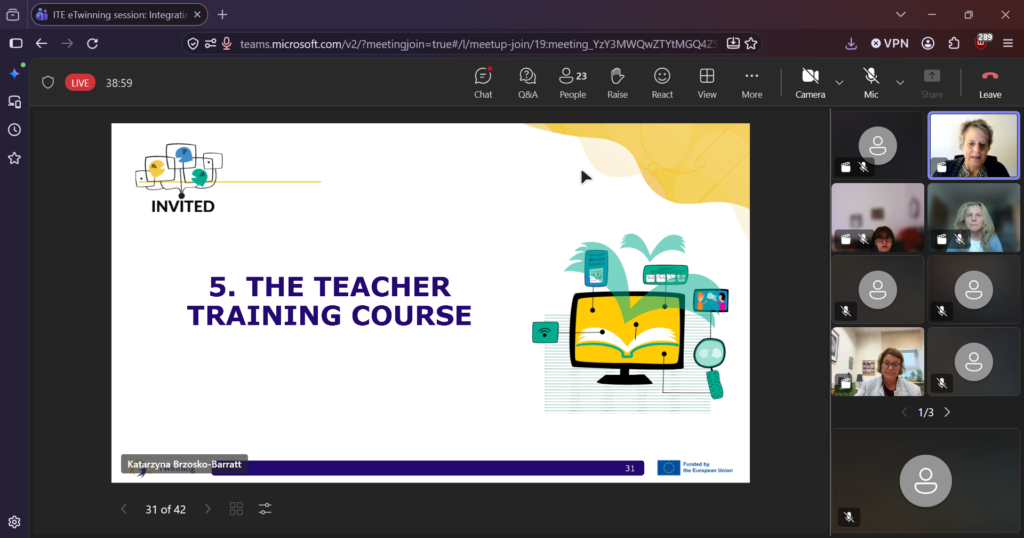
A central focus of the webinar was the INVITED Online Teacher Training Course, which aims to equip current and future teachers with the knowledge and practical skills needed to implement virtual exchange projects with young learners.
The self-paced course comprises six modules and approximately 25 hours of learning. It introduces participants to the pedagogical foundations of virtual exchange, explores the opportunities and challenges of international online collaboration, and provides practical guidance for designing and implementing projects in the early language classroom.
By making these resources freely accessible, the INVITED project seeks to support teachers in developing confidence and competence in using digital tools to create meaningful international learning experiences.
Another important aspect of the session was the integration of virtual exchange into initial teacher education (ITE). The four university partners shared how their collaboration has created opportunities for prospective teachers to engage with international partners, experience virtual exchange first-hand and reflect on its potential for their future teaching practice.
Rather than approaching virtual exchange solely as a digital teaching tool, the INVITED project highlights its potential to foster intercultural understanding, collaboration, communication and digital literacy. Experiencing these processes as learners themselves enables future teachers to better understand the pedagogical possibilities of virtual exchange and consider how to adapt them to the needs of young learners.
The session demonstrated the value of collaboration between higher education institutions in developing innovative approaches to language teacher education. By bringing together expertise and experiences from Freiburg, Ljubljana, Murcia and Warsaw, the INVITED project has been working towards a shared goal: making international collaboration an accessible and meaningful part of early language education.
The webinar also highlighted the importance of connecting research, teacher education and classroom practice. Through its needs analysis, practical resources and online teacher training course, INVITED provides teachers and prospective teachers with opportunities to explore virtual exchange and bring international learning experiences into their own educational contexts.