How can virtual exchange (VE) create meaningful opportunities for intercultural learning and international collaboration in pre-school and primary language education? And how can teachers turn the idea of connecting young learners across borders into a practical classroom project?
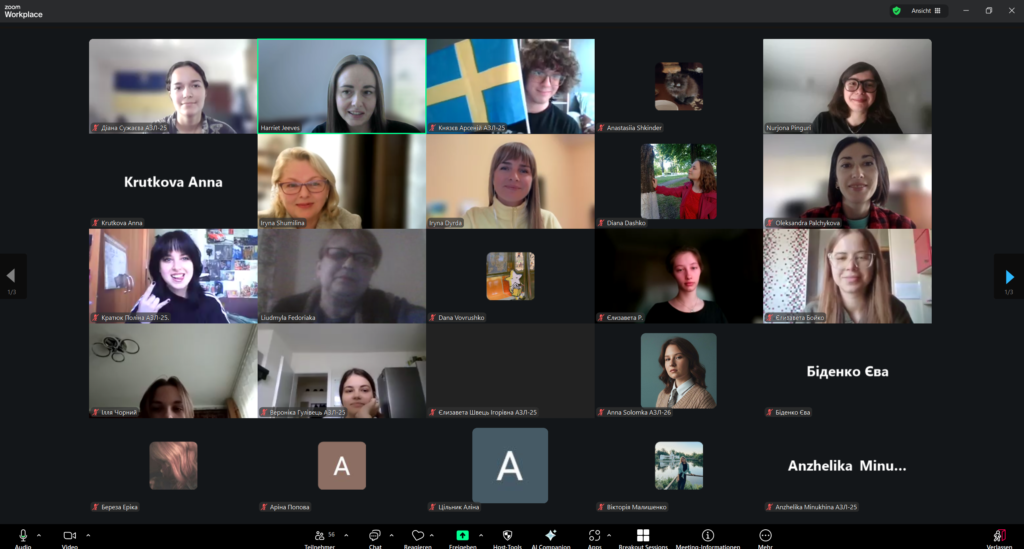
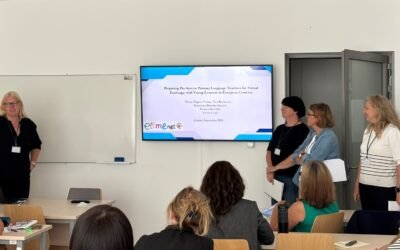
These were some of the questions explored during an online workshop delivered by Nurjona Pinguri and Harriet Jeeves from the University of Education Freiburg (Germany). At the invitation of Prof. Oleksandra Palchykova, they met with around 80 students and staff from the English Philology Department of Kryvyi Rih State Pedagogical University (Ukraine) to explore the potential of virtual exchange in early language education.
The workshop introduced participants to the key principles of virtual exchange, explored the use of eTwinning as a platform for international school collaboration, and offered practical guidance on designing and implementing VE projects with young learners.
Drawing on the work and experience of the Erasmus+ project INVITED – Integrating Primary and Pre-school Virtual Exchange Projects into Language Teacher Education, the session aimed to bridge the gap between theory and practice, providing participants with ideas, resources and tools to bring international collaboration into their future or current teaching contexts.
1. Virtual Exchange in Primary and Pre-school Language Education: The INVITED Project
Virtual exchange offers teachers and learners opportunities to connect with peers in other countries through digital technologies and collaborative learning activities. Rather than simply communicating online, learners work together towards shared goals, exchange perspectives and engage in meaningful intercultural encounters.
While virtual exchange has become increasingly established in higher education, its potential in pre-school and primary language education is still developing. Yet, even very young learners can benefit from connecting with children in other countries, discovering similarities and differences in their everyday lives, and using a foreign language for authentic communication.
This is where the Erasmus+ project INVITED comes in.
The project aims to integrate virtual exchange into initial language teacher education and support pre-service and in-service teachers in developing the knowledge, skills and confidence needed to implement VE projects with young learners.
Bringing together partners from Germany, Spain, Slovenia, Poland and the United Kingdom, INVITED combines research, teacher education and classroom practice to explore how virtual exchange can become a meaningful part of early language learning.
During the workshop, participants were introduced to the project’s approach to virtual exchange, including its pedagogical foundations, the opportunities it offers for intercultural learning and the importance of designing age-appropriate, purposeful activities.
From Theory to Practice
Understanding the potential of virtual exchange is only the first step. The real challenge lies in translating theoretical principles into projects that work in everyday educational settings.
The workshop therefore moved from an introduction to virtual exchange towards practical questions: What makes a good VE project? How do teachers find suitable partners? What should learners actually do together? And which digital tools can support their collaboration?
The following activities provided participants with a step-by-step introduction to planning their own virtual exchange projects.
2. Online Teacher Training Course on Virtual Exchange with Young Learners
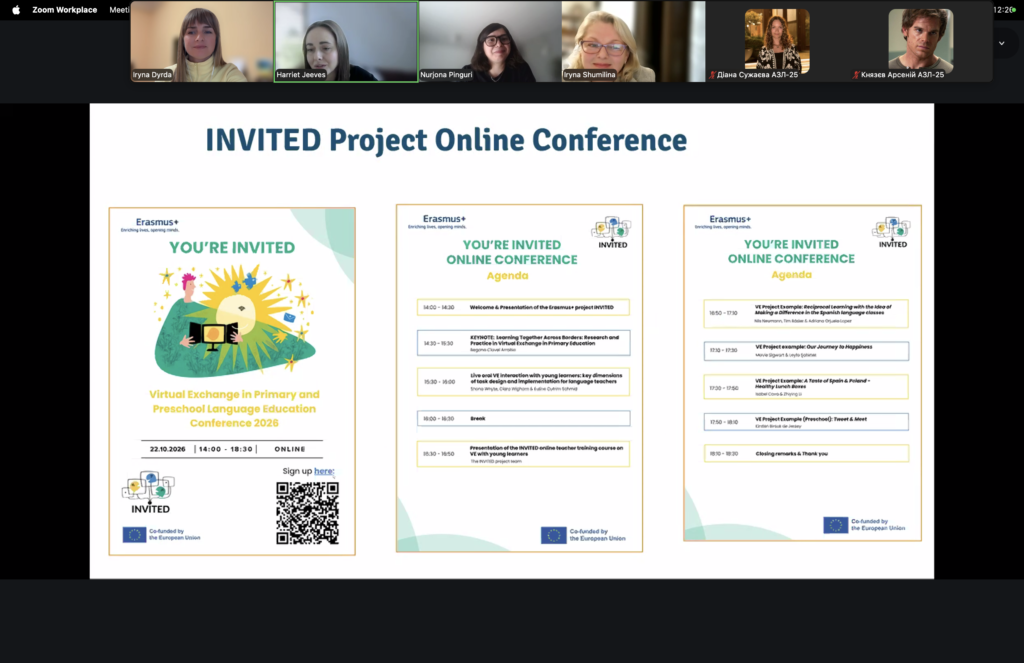
A central resource developed within the INVITED project is the Online Teacher Training Course: Virtual Exchange in the Early Language Classroom.
During the workshop, participants were introduced to the course structure and its key themes. The course addresses different dimensions of virtual exchange, combining theoretical input, practical examples, reflection activities and opportunities to develop ideas for classroom implementation.
It provides teachers with guidance on understanding virtual exchange, planning collaborative activities, selecting appropriate digital tools and supporting intercultural learning.
Importantly, the course does not approach virtual exchange as a purely technological undertaking. Instead, it emphasises the pedagogical decisions behind successful projects: What do we want learners to achieve? How can we create opportunities for meaningful interaction? And how can digital technologies support rather than dictate the learning process?
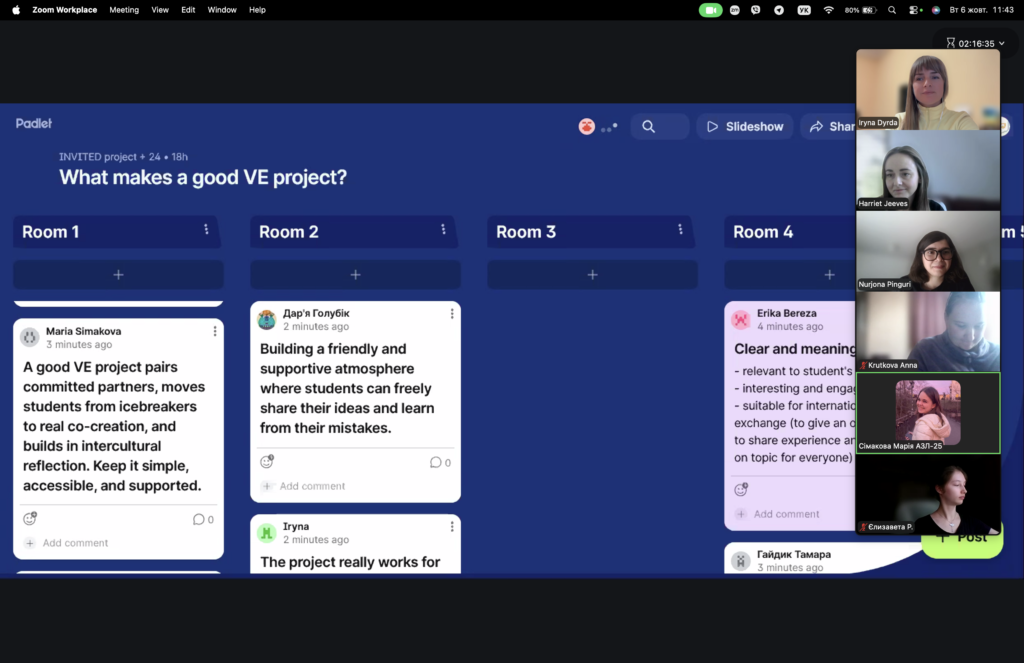
3. Group Work: What Are the Criteria for Good Virtual Exchange Projects?
What makes a virtual exchange project successful, particularly when working with very young learners?
To explore this question, participants worked collaboratively to identify the characteristics they considered essential for a meaningful and effective VE project.
Drawing on their own experiences and perspectives as students and educators, they discussed questions such as:
– How can we ensure that all learners have opportunities to participate actively?
– What makes a topic meaningful and relevant to young learners?
– How can we create opportunities for genuine communication and collaboration?
– How can we make intercultural learning an integral part of the project?
– What role should teachers play in supporting and facilitating the exchange?
– How can we ensure that the activities are age-appropriate and inclusive?
The ideas generated during the group discussions were then connected to the INVITED Criteria for Virtual Exchange Projects.
These criteria provide a pedagogical framework to help teachers plan, evaluate and reflect on their VE projects. They highlight the importance of purposeful collaboration, meaningful communication, intercultural learning, learner participation and appropriate pedagogical and technological choices.
Rather than following a fixed recipe, the criteria encourage teachers to make informed decisions based on their learners’ needs, educational contexts and learning objectives.
The activity also demonstrated that designing a successful VE project is not simply about choosing a digital platform or finding a partner school. It starts with identifying what learners should experience, learn and achieve through their collaboration.
4. Setting Up a Virtual Exchange Project: Developing Competences, Finding a Partner, Choosing a Topic, Designing Tasks and Selecting Tools
Having explored the principles and criteria of good virtual exchange projects, participants moved on to the practical steps involved in setting up their own exchanges.
Developing a VE project requires more than enthusiasm and a good internet connection. Teachers need to consider several interconnected elements to ensure that the exchange is purposeful, manageable and meaningful for everyone involved.
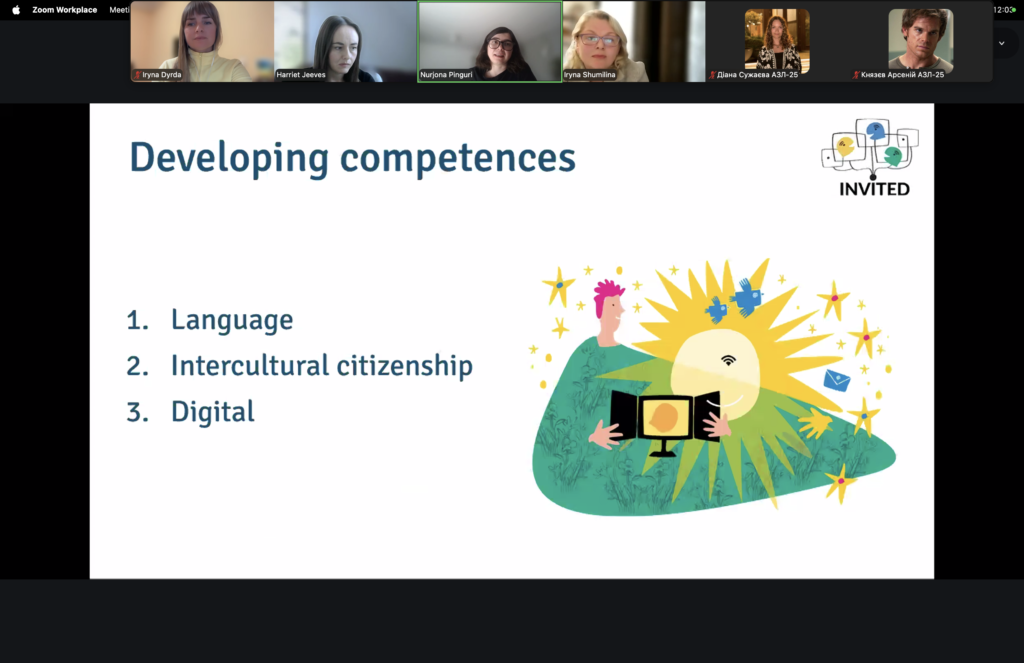
Developing the necessary competences
Before implementing a virtual exchange, teachers need to develop a range of competences, including digital, pedagogical, linguistic and intercultural skills. They also need to be able to facilitate online collaboration, coordinate activities with partner teachers and guide learners through intercultural encounters.
Finding an international partner
One of the first practical challenges is finding a suitable partner school or teacher. Participants explored opportunities for establishing international connections, including eTwinning, the European online community for schools.
Through eTwinning, teachers can connect with colleagues across Europe, exchange ideas and develop collaborative projects with their learners in a safe online environment. It provides an accessible starting point for teachers interested in international school collaboration.
Choosing a meaningful topic
The topic is an essential starting point for engaging young learners. It should be relevant to their everyday experiences, provide opportunities for intercultural exploration and allow learners from different contexts to contribute their own perspectives
The key is to find a topic that creates a genuine reason for learners to communicate and learn from one another.
Designing collaborative tasks
A successful VE project goes beyond exchanging greetings, pictures or presentations. Learners should have opportunities to work towards a shared outcome.
Selecting suitable digital tools
Finally, teachers need to select digital tools that support their learning objectives. These might include eTwinning, video-conferencing platforms, collaborative digital boards, presentation tools or applications for creating digital stories.
By bringing these elements together, participants gained a clearer understanding of the different decisions involved in planning and implementing a virtual exchange project.